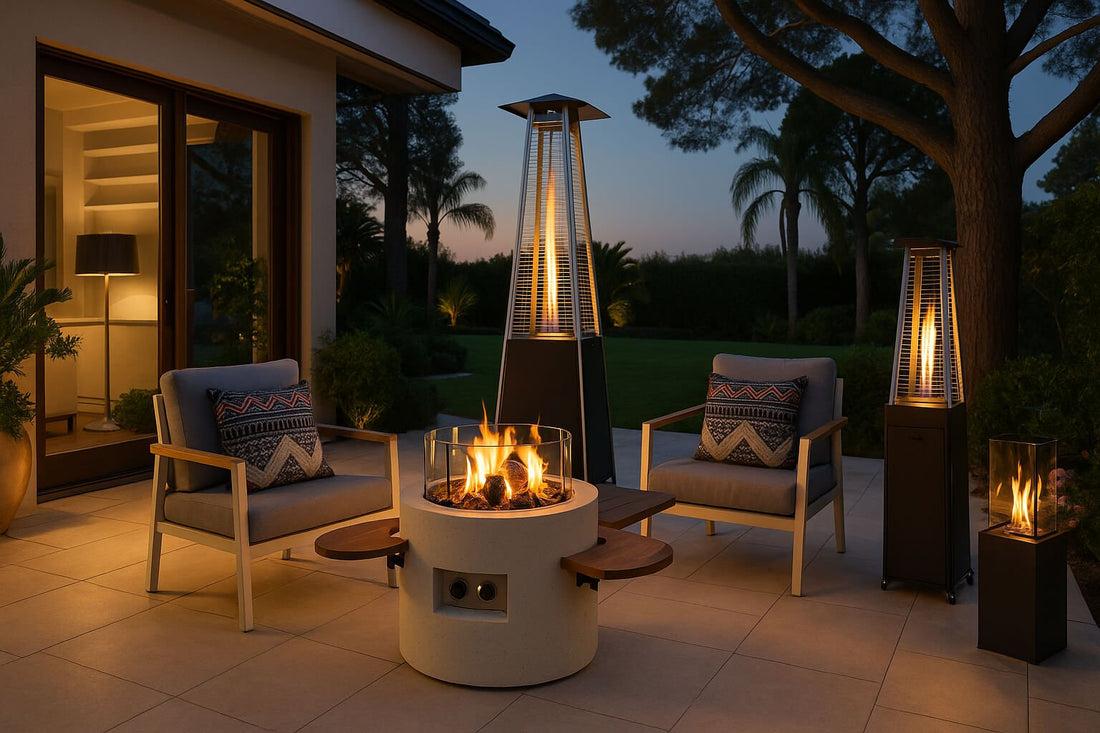
An outdoor patio can be one of the most enjoyable parts of a home, but cooler evenings often mean heading indoors earlier than you would like. Adding an outdoor heating solution can make the space more comfortable and extend the time you spend outside.
Two popular options are fire pits and patio heaters. Both can provide warmth, but they create very different experiences. A fire pit can become the centrepiece of a gathering, while a patio heater offers a more practical way to add warmth to a seating or dining area.
So which one makes more sense for your backyard?
The answer depends on how you use your outdoor space, how many people you typically host, your budget, and the amount of maintenance you are willing to handle. Here is how to compare the two before making a purchase.
1. Understand How Each Heating Option Works
Before comparing prices or appearance, it helps to understand the basic differences between the two options.
A fire pit produces heat from a contained fire, using wood, propane, natural gas, or another fuel depending on its design. It can provide radiant warmth to people sitting nearby, and a visible flame creates a natural focal point for outdoor gatherings.
A patio heater is designed primarily to provide heat to people and surrounding areas. Many residential models use propane, natural gas, or electricity. Depending on the design, they may direct infrared heat toward a particular seating area or distribute warmth around the unit.
Neither option heats every outdoor space equally. Wind, temperature, the distance between people and the heat source, and the layout of the patio can all affect comfort.
A useful starting point is to decide whether you want a social centrepiece, a practical source of targeted warmth, or a combination of both.
2. Compare Fire Pits and Patio Heaters at a Glance
| Feature | Fire pit | Patio heater |
|---|---|---|
| Main appeal | Warmth, atmosphere, gathering around a flame | Convenient warmth for seating and dining |
| Fuel options | Wood, propane, natural gas, depending on model | Propane, natural gas, or electricity, depending on model |
| Typical placement | Open, suitable outdoor area | Appropriate location with required clearances |
| Maintenance | May involve ash removal, cleaning, and fuel management | Varies by fuel type; periodic cleaning and inspection |
| Wind performance | Flame and heat can be affected by wind | Performance varies by heater design and exposure |
| Best suited to | Relaxed gatherings and fire-centred seating | Dining areas, outdoor lounges, and targeted heating |
These are general comparisons. Actual performance depends on the specific product, its output, fuel, weather conditions, and installation requirements.
A large fire pit is not necessarily more effective than a well-positioned heater, and a tall patio heater does not guarantee that everyone around a large table will feel equally warm.
Consider the space you need to heat rather than choosing based on appearance alone.
3. Think About How You Actually Use Your Patio
The best heating solution is usually the one that fits your existing outdoor routine.
If your favourite evenings involve gathering with friends, enjoying drinks, or sitting outside after dinner, a fire pit may be a natural fit. The visible flame provides a focal point, and the seating arrangement can encourage conversation.
If you mainly use your patio for outdoor meals, a patio heater may be more practical. It can provide warmth near a dining area without making an open flame the centre of attention.
Consider these common situations.

For relaxed evening gatherings
A fire pit can create a natural gathering point, particularly when chairs are arranged around it with enough safe clearance.

For outdoor dining
A suitably positioned patio heater can provide targeted warmth without requiring guests to gather around a central flame.
![Small Patio Ideas for Cozy Outdoor Spaces [2025]](https://images.openai.com/static-rsc-4/JAh11nJxlbw5WmpPHIXV3MAxJeTYftNJbXhNlv3H3uMFD_5a6wRg3V_oL6QnGHWjJTngyt5wiVJVI2_KPsKKfNNNs2MyFb6fjuOQpKB-5FTr259DkEsEhWE8JqfeIflhbGfoWF4eWzJpQ3sJR7ezFsFjaR0wFikmFZeVoKZgPr8?purpose=inline)
For smaller patios
A compact, appropriately rated heating option may work better than a large freestanding unit. Available space and required clearances should determine the choice.
Before buying anything, measure the area and sketch where your furniture will sit. This makes it easier to identify a suitable location and avoid buying a heater that is too large or a fire pit that leaves little usable space.
4. Consider the Running Costs, Not Just the Purchase Price
The initial price is only part of the cost of outdoor heating.
A wood-burning fire pit may have a relatively affordable purchase price, but you will need a reliable supply of suitable firewood, somewhere to store it, and time to clean out ash. Gas fire pits avoid much of the ash management, although fuel costs and installation requirements still apply.
Propane patio heaters require fuel refills or replacement cylinders. Natural gas models may involve professional installation and associated costs. Electric heaters use electricity, and their running costs depend on the unit’s power consumption and your local electricity tariff.
A simple way to estimate the running cost of an electric heater is:
Power consumption in kilowatts × hours of use × electricity price per kilowatt-hour.
For example, a 1.5 kW electric heater running for three hours uses 4.5 kWh of electricity. Multiply that amount by your actual electricity rate to estimate the energy cost for that session.
For gas appliances, check the manufacturer’s fuel-consumption specifications and compare them with local fuel prices. Real-world costs will vary with heat output, operating time, and how often you use the equipment.
Do not assume the most powerful heater is automatically the best value. A smaller unit that effectively warms a compact seating area may be more economical than a large unit running for hours.
5. Check Safety and Clearance Requirements Before Buying
Outdoor heating equipment needs careful placement. This is particularly important in smaller gardens, beneath pergolas, and on covered patios.
Wood-burning and gas fire pits produce flames and hot surfaces. They must be kept away from combustible materials and used only in locations permitted by the manufacturer and local regulations.
Patio heaters also have clearance requirements. A heater that is suitable for an open patio may not be approved for use beneath a low roof, near fabric awnings, or inside an enclosed space.
Before purchasing, check the following:
- The required distance from walls, fences, furniture, plants, and overhead structures.
- Whether the model is approved for covered outdoor areas.
- The stability of the surface and the risk of tipping.
- Fuel storage and connection requirements.
- Local fire restrictions, building rules, and any applicable homeowners’ association requirements.
Never use outdoor fuel-burning equipment in an enclosed room, garage, or other inadequately ventilated space. Carbon monoxide can be deadly and may accumulate without obvious warning.
For natural gas connections or any installation requiring modifications to gas lines, use a qualified professional where required. Follow all instructions for lighting, operation, shutdown, and maintenance.
Safety requirements should help determine which product you buy, not be something you try to work around after it arrives.
6. Think About Wind and Cold Weather
Outdoor heating is affected by the environment around it. Even a powerful unit may disappoint if it is exposed to strong winds or positioned too far from the people who need warmth.
Fire pits can be particularly sensitive to wind, which may disturb flames, blow smoke toward guests, and carry sparks from wood-burning models. The direction of prevailing winds is therefore worth considering when choosing a location.
Patio heaters also have limitations. Wind can carry heat away, and an open garden may feel significantly colder than a sheltered patio. Infrared heaters can be useful because they warm people and surfaces directly rather than relying entirely on warming the surrounding air.
To improve comfort, consider adding wind protection through appropriately designed screens, landscaping, or a sheltered seating arrangement. Any screen or shelter must still comply with the heating appliance’s clearance and ventilation requirements.
Do not enclose a fuel-burning fire pit or heater in an improvised shelter. If the weather is too windy for safe operation, switch the appliance off and move the gathering indoors.
7. Choose Materials and Finishes That Suit Your Outdoor Style
Outdoor heating equipment can also influence the appearance of your patio.

A fire pit often becomes a permanent visual feature, so its shape and materials should complement the rest of the garden. Concrete and stone finishes can suit contemporary landscapes, while simpler metal designs may work well in more casual outdoor spaces.
Patio heaters tend to be taller and more functional in appearance. Black or stainless-steel finishes can blend into modern outdoor furniture, while wall-mounted or ceiling-mounted models may preserve valuable floor space when appropriately installed.
Consider the other materials already in your garden, including paving, fencing, furniture, and planters. Coordinating a few finishes can make the whole space feel more intentional without requiring a complete redesign.
Durability matters as well. Check whether the appliance is designed for outdoor exposure and whether it needs a protective cover during storage. Even weather-resistant materials can deteriorate if they are exposed to moisture, dirt, and temperature changes without appropriate care.
8. Make Maintenance Part of Your Decision
An outdoor heating appliance should be convenient enough that you will actually use it.
Wood-burning fire pits generally require more hands-on cleaning. Ash must be allowed to cool completely before disposal, and the fire bowl may need periodic cleaning and inspection.
Gas fire pits avoid wood ash but still need appropriate cleaning and checks of burners, connections, and other components according to the manufacturer’s instructions.
Electric patio heaters may need less routine cleaning, but their heating elements, cables, mounting hardware, and weather protection still require attention.
Before each season, inspect your equipment for visible damage, corrosion, loose fittings, and signs of wear. Do not use an appliance with damaged gas connections, compromised electrical components, or other safety concerns until it has been properly assessed.
If you live somewhere with harsh winters, plan how you will protect the appliance when it is not in use. A suitable cover and dry storage for removable components can help extend its useful life.
9. Which Option Offers the Best Value?
There is no single winner for every household. The best choice depends on what you want your outdoor space to do.
A fire pit may offer greater enjoyment if you value the atmosphere of an open flame and regularly gather with friends. A patio heater may be the more practical investment if you want convenient warmth while dining or sitting in a particular area.
If your budget is limited, compare the total cost of ownership rather than focusing only on the advertised price.
Include the appliance, fuel or electricity, any necessary installation, accessories, maintenance, and storage. Also consider how many hours you expect to use it each year.
For some households, a modest electric heater is enough. Others may prefer a gas fire pit that serves as both a heat source and a focal point. In a larger garden, using separate heating zones may make more sense than trying to heat the entire outdoor area with one appliance.
The goal is to make the space more comfortable without paying for capacity or features you rarely use.
Final Thoughts
Both fire pits and patio heaters can make outdoor living more enjoyable, but they serve slightly different purposes.
Choose a fire pit if you want a gathering point with a visible flame and do not mind the associated fuel management and maintenance. Choose a patio heater if convenient, targeted warmth is your priority, particularly around an outdoor dining or lounge area.
Before buying, measure your space, check local restrictions and safety clearances, compare running costs, and consider how the equipment will perform in your usual weather conditions.
Most importantly, select a heating solution that suits the way you already live outdoors. A thoughtfully chosen appliance can help you enjoy more comfortable evenings without making your backyard harder to maintain.